What is mindfulness in the workplace?
When you practice mindfulness at home or mindfulness in the workplace, you’ll be a better version of you! Your cellphone is buzzing, your work phone is ringing, and your boss asks you into her office. On top of that, there is a pile of paperwork that screams for your attention. So what do you do? Well, if you’re like most workers in the 21st century, you “multi-task.”
True multi-tasking is not possible. You heard correctly. It is physically impossible to split your attention so that you can accomplish two work tasks at the same time.
People who try to multi-task are less effective when they focus on two or more tasks than they would be if they focused on one thing until it was done. This is where “mindfulness” comes in. People who have been trained in “mindfulness” say that they become more aware of how their own mind works. They see how their own filters impact perceptions and therefore the decisions they make.
Some organizations are leading the way by using such tech tools and by creating strategies to take their employees from frazzled to zen. Here's wise advice on how you can do it too.
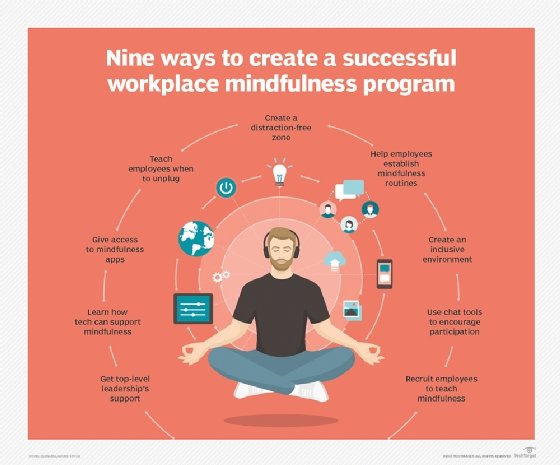
1. Get top-level support
It's not enough to set up a "wellness room" or offer mindfulness training if the company culture clearly doesn't support such efforts, and that support starts in the C-suite. The more invested leadership is in reducing stress levels and promoting workplace mindfulness initiatives, the better the chance of success.
Take the example of TimeXtender. Leadership truly supports the concept of workplace mindfulness. Mindfulness practices are woven throughout TimeXtender's culture, and Co-founder Krog Iversen is even a certified mindfulness practitioner.
2. Use tech in the right ways
"Being mindful is about paying attention to the present moment without judgment," said Jennifer Gentry, benefits program manager for Intuit, which offers a corporate wellness program called Well Minds. "Being present varies per person. It can mean using a smartphone as a tool to help practise mindfulness, or it might mean taking time away from all technology to recharge."
The constant buzz of email, instant messages, and other bursts of information can make it difficult to focus, said Karen Wiens, the director of global benefits for Cisco, which has launched a mindfulness program called Mind Set. That said, she believes that "the technology isn't the problem; it's how we use it."
3. Use mindfulness apps
To the above point, some companies are carrying out their workplace mindfulness with the help of technology.
For example, Intuit's Well Minds includes access to meditation app Headspace, emotional well-being app Lantern, and virtual mindfulness classes through Lantern. At Harvard Pilgrim Health Care, employees attend mindfulness sessions via Adobe Connect conferencing software and receive meditation lessons via the meditation website and app 10% Happier. Cisco utilizes video conferencing to coach employees on mindfulness and share information through Cisco Spark.
In addition, companies may want to investigate apps to help employees "just breathe" - a key component of mindfulness. Several devices can provide users with guided breathing exercises, such as some Fitbit models with the Relax feature and Apple Watch's Breathe app.
4. Teach employees when to unplug
Ideally, mindfulness workshops should help employees understand how to be thoughtful about how and when they use technology, Wiens said. Companies should help employees identify triggers, such as high-stress levels, that can cause them to seek out technology as a distraction and teach them healthier alternatives, such as using their favourite app to meditate or to take a time out.
Through its Well Minds program, Intuit employees are learning practical mindfulness tips for dealing with technology, Gentry said. For example, to stay focused, employees are encouraged to turn off all alerts that don't come from people (such as breaking news alerts from CNN).
5. Create a distraction-free zone
Lack of attention can spread and detracts from those who are trying to focus, so looking at ways to support focus is important.
Cisco's Mind Set program, introduced Oct. 5, 2017, is a five-part course designed to teach employees workplace mindfulness techniques. Each session is delivered via Cisco WebEx conferencing. All participants will appear on screen to the others in the video conference, said Ted Kezios, Cisco's senior director of global benefits. "When you know you can be seen on camera, you might be less likely to multitask," such as firing off a quick email while the mindfulness instructor is talking, Kezios explained.
6. Help employees establish mindfulness routines
The benefits of healthy endeavours and success-promoting habits come from regular routines, not onetime efforts, and the same is true of mindfulness. To this end, businesses should encourage employees to develop a mindfulness practice.
"Start by establishing a fixed schedule for mindfulness practice and training," said Krog Iversen. A set schedule - every Monday, in TimeXtender's case -- helps reinforce the practice and weaves mindfulness deeper into the organization's DNA.
7. Create an inclusive environment
TimeXtender invites anyone with an internet connection (not just employees) to join its Monday Mindful Recharge sessions. The offer integrates well with, and reinforces, the company's mantra of "time matters," as well as its goal of making mindfulness in the business part of its DNA, said Krog Iversen.
In addition, she said that ideally, employers should help enable meditation practices by designating a conference room or other space as a "mindfulness room."
8. Use chat tools
Group collaboration tools are useful for raising awareness about upcoming mindfulness training or meditation sessions and encouraging dialogue among practitioners. For example, TimeXtender uses collaboration software Podio to post inspirational mindfulness messages two or three times weekly, said Krog Iversen. Video recordings of the company's Monday Mindful Recharge meditation sessions are made available on Podio the next day, for employees who weren't able to attend.
"Since we work across multiple time zones, the key is to share information and sessions for everyone," Krog Iversen added.
9. Look to employees for training support
Many businesses outsource their workplace mindfulness training to professionals in the field. And though Cisco is among them, the company also plans to have trained employees lead some Mind Set workshops. Participants of those sessions may be "more willing to listen to someone internal to the company who lives and breathes our environment," Kezios said.
Source: SearchHR Software